 Lady Blue
Dishwasher, microwave, oven – what is allowed depends on the shape of the piece and is stated on its product page. The rest always applies: thermal shock, washing and storage.
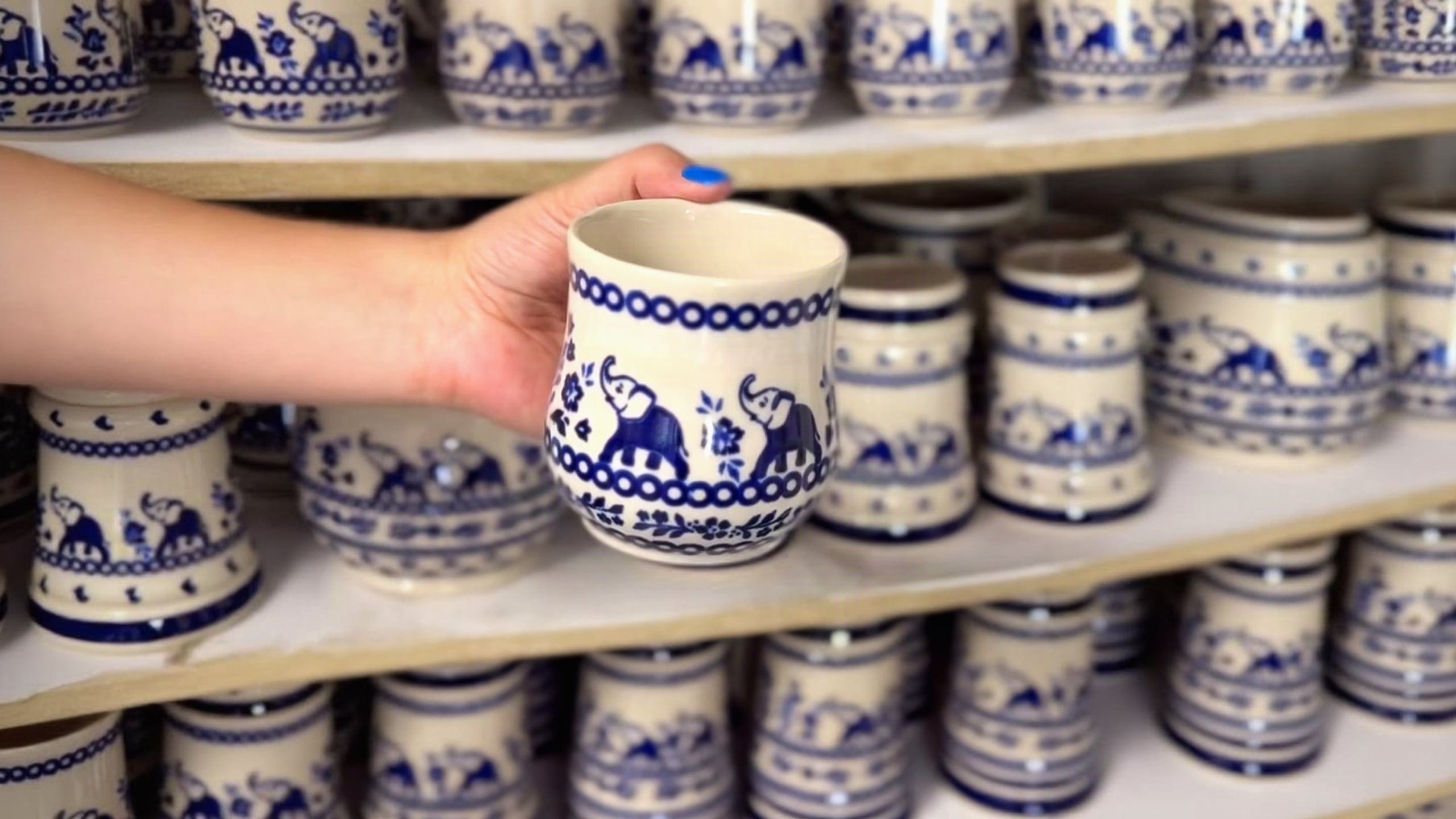
AI-extended frame ·Cobalt under the glaze · just out of the kiln
Pottery from Bolesławiec is made to be used, not kept in a cabinet. A few rules are enough to keep the pattern looking the same in ten years’ time – and one of them matters more than all the others.
Why the pattern does not wear off
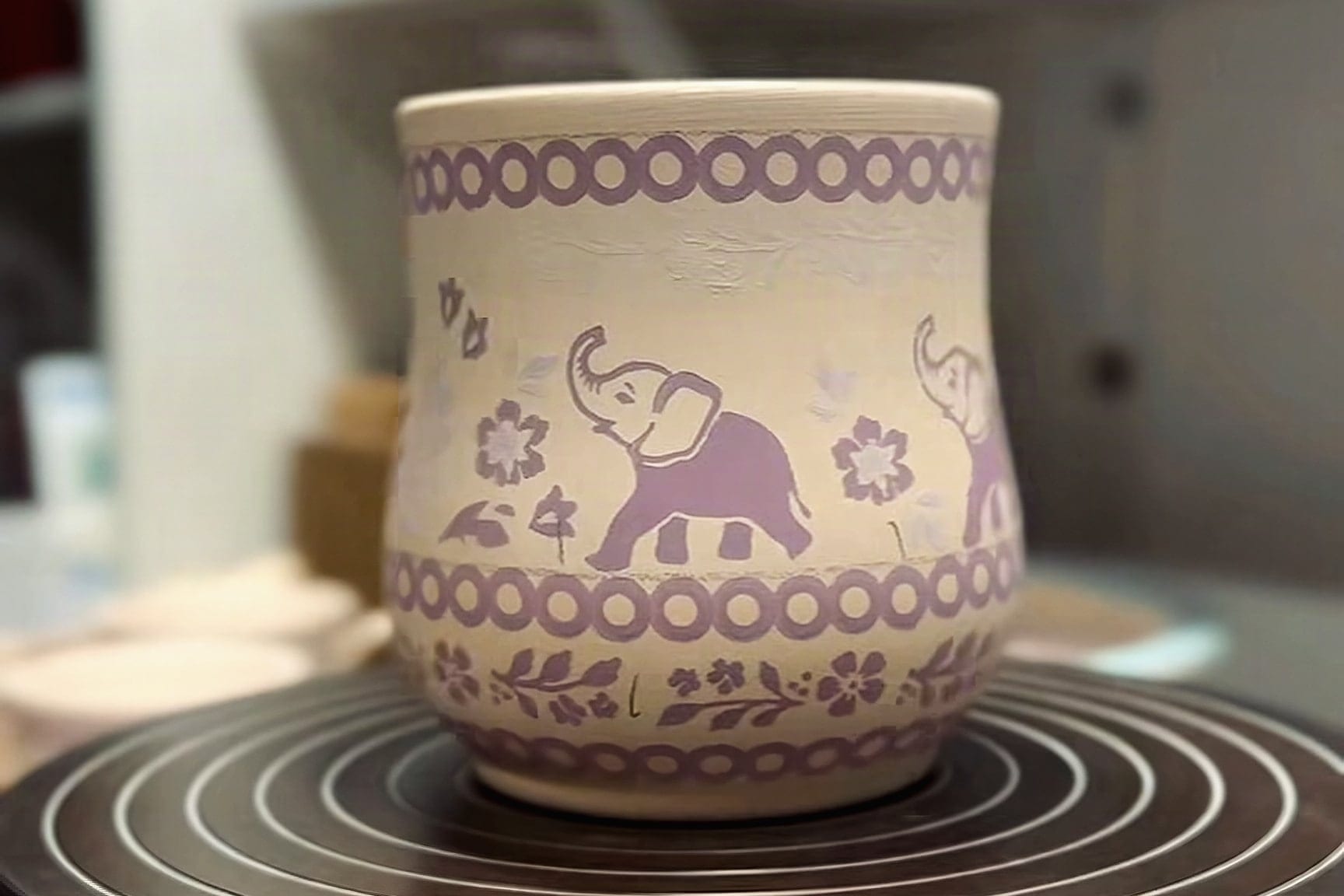
Lady Blue pieces are glazed stoneware, and the pattern sits under the glaze. We apply the paint to raw bisque, then the piece is glazed and fired at 1240 °C – the cobalt is sealed beneath a glassy layer. That is why, in normal use, the pattern does not wear off or fade, even after years of daily washing. What this looks like in the studio is described in how a pattern is made on pottery from Bolesławiec.
Dishwasher, microwave, oven – check the product page
Whether a piece can go in the dishwasher, the microwave or the oven depends on its shape, not on its pattern. That is why we do not give one answer for everything here: a mug and a baking dish are different pieces. The information is on every product page, under “Care” – for example for mugs or baking dishes.
How to read it:
- “Dishwasher: yes” means: any programme, no temperature limit.
- “Dishwasher: no” means: wash this shape by hand only.
- For the microwave the page simply says “yes” or “no” – no exceptions and no “briefly”.
- For the oven there are three answers: “no”, “up to … °C” (the limit for this shape) or “yes – no temperature limit”.
The same sentences appear on every product page, in the same order – dishwasher, microwave, oven. If one of them is missing, it means we make no promise for that shape.
If the piece was a gift and you do not know the shape – write to us via the contact form, ideally with a photo of the base.
Thermal shock – the one thing we always watch out for
Whatever the shape, pottery does not like sudden changes in temperature. Hot soup in a mug straight from the fridge, cold milk in a piece just out of hot water, a cold dish placed in a preheated oven – these are the fastest ways to make the clay and the glaze expand at different rates until a hairline crack appears.
There is one rule: let the piece come to room temperature before you change it abruptly. A dish from the fridge goes on the worktop before it goes in the oven; pour boiling water into a mug that has been sitting in the kitchen, not in a cold pantry.
Washing by hand
A soft sponge or cloth, ordinary washing-up liquid, warm water. No metal scourers or abrasive powders – the glaze is hard, but prolonged rubbing against metal can dull it. In the sink, pieces should not touch rim to rim; the rims of plates and bowls are the easiest to chip.
Storage
In the cupboard it is worth separating plates and bowls with a cloth or a felt pad – glaze wears against glaze too, only more slowly. Put pieces away dry. Mugs are best standing, not hung by the handle one on top of another.
Differences between pieces are not a defect
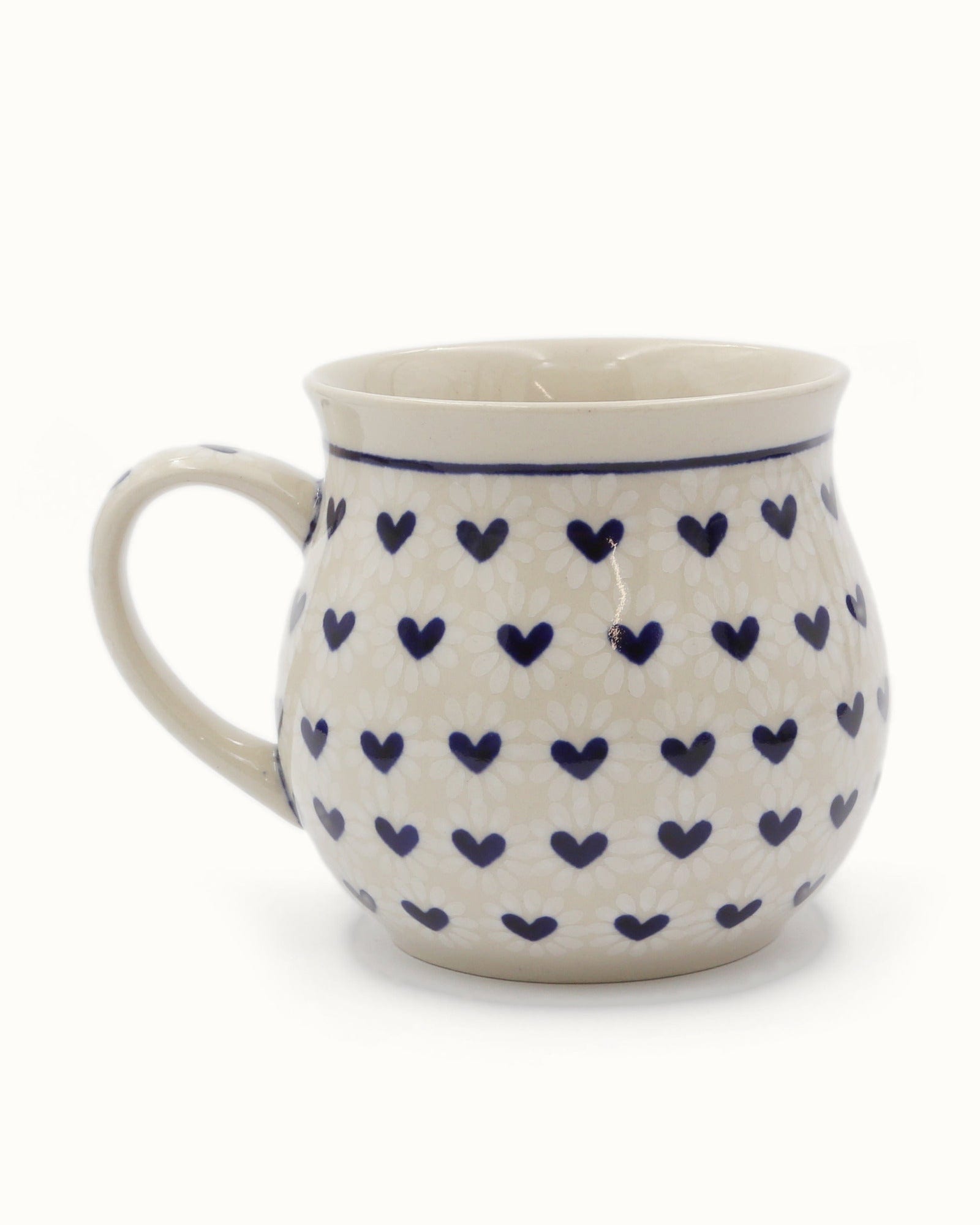
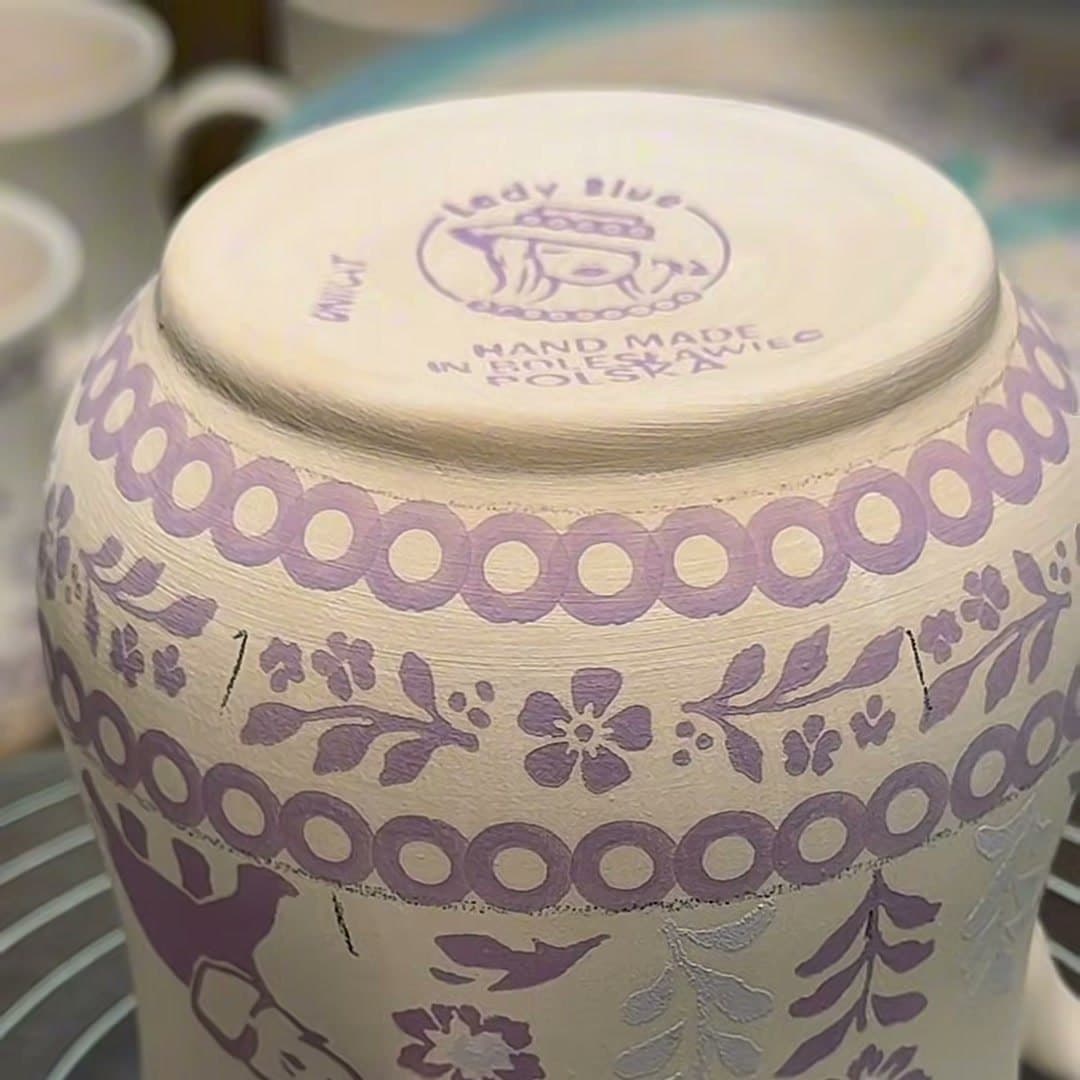
No two hand-painted pieces are identical. Slight differences in the depth of colour, the thickness of a line or the spacing between stamp prints are the trace of the hand that painted them – not grounds for a complaint. This is easiest to see in patterns made of hundreds of tiny prints, such as My Heart Beats Blue, where every heart is a separate movement of the sponge. On the base of every piece there is a mark: the Lady Blue logo, the words “Hand made in Bolesławiec Polska” and the UNIKAT stamp.
If something does happen
A hairline crack after thermal shock does not always mean the end of a piece, but do not use such a mug for hot drinks any more. If a piece reached you damaged, the rules are on the returns and complaints page; for anything else – write to the studio, we answer ourselves.