 Lady Blue
From a sheet of paper and a pencil, through a sponge and lilac paint, to the kiln where lilac turns to cobalt. One pattern’s journey through our studio in Bolesławiec – step by step.
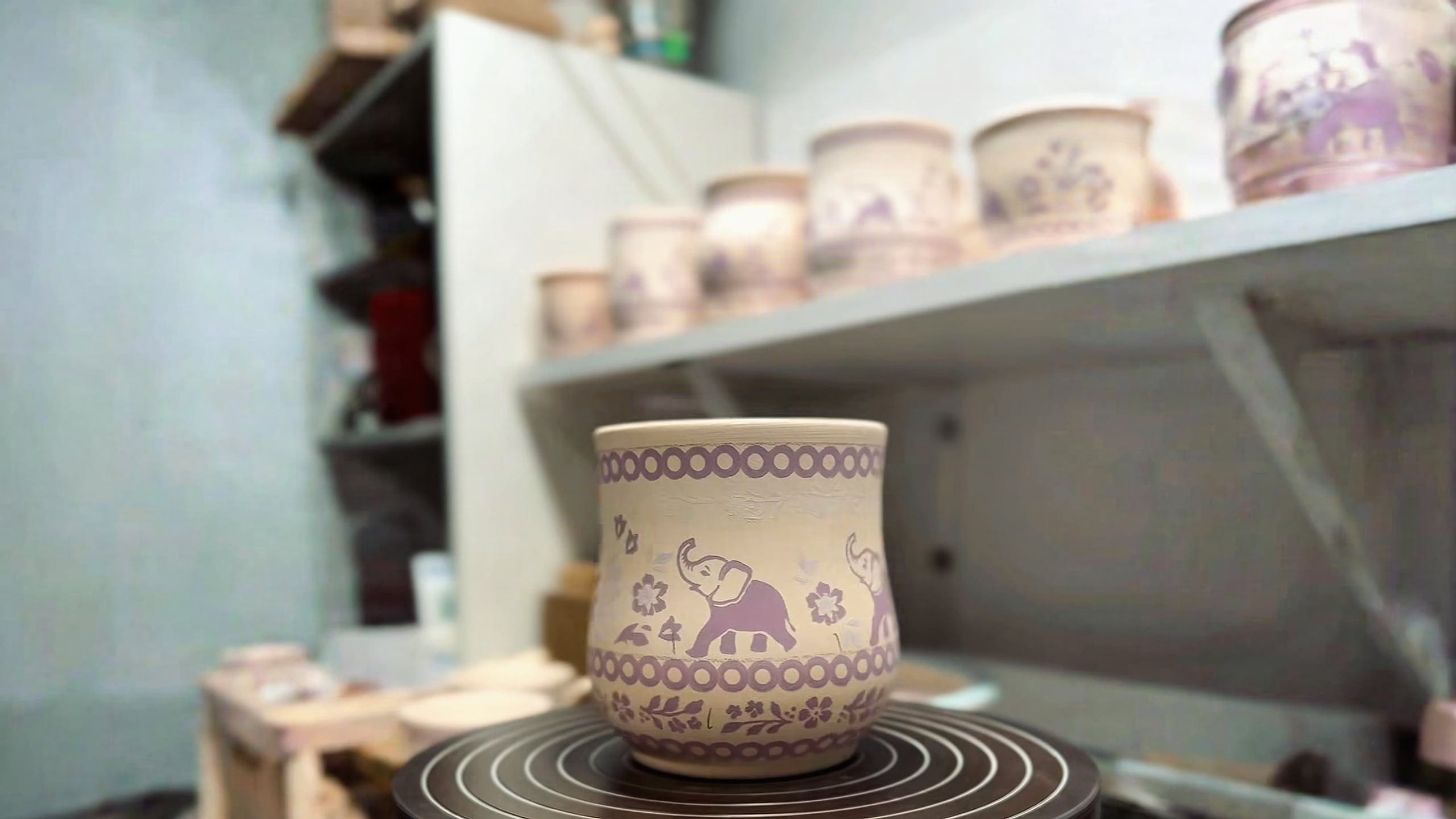
AI-extended frame ·Bolesławiec Elephants before firing · the paint still lilac
Paper first, not the pot
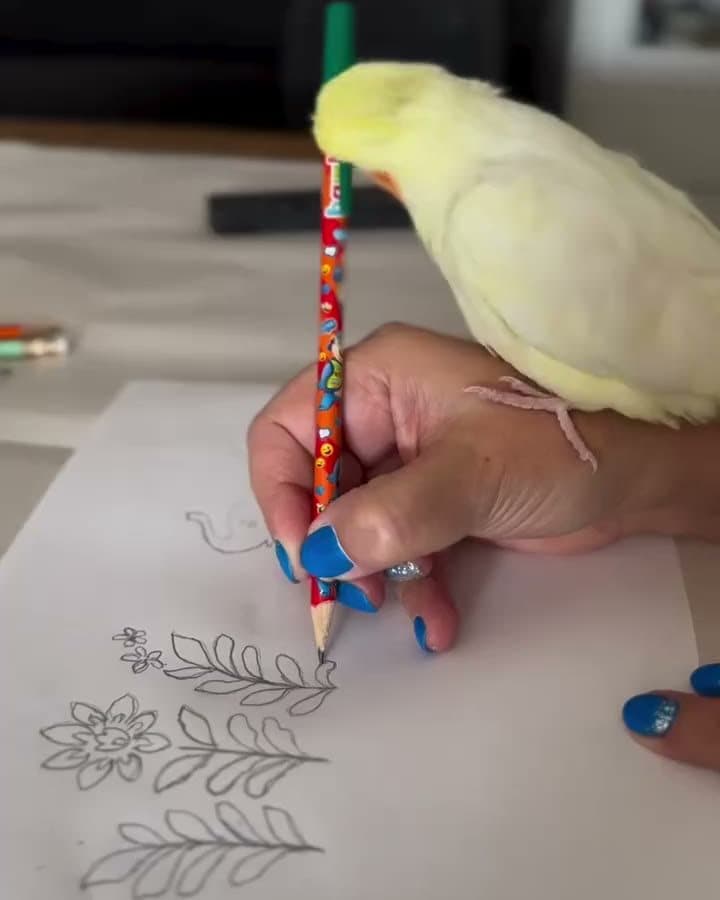
Every Lady Blue pattern begins on a sheet of paper. I sketch sprigs, flowers, sometimes animals in pencil – at a white table, often with Łobuś the parrot on my hand, who has an opinion on every line. On paper the drawing can still change ten times. On the pot it no longer can.
Only when the motif is ready does the stamp come into being: the drawing is cut into a sponge, like a rubber stamp. We show this up close in the “Pattern” chapter of the Studio page.
The sponge stamp – print by print
The sponge decides whether a pattern will survive hundreds of prints. One print is one heart, one flower, one circle. Where an even rhythm matters – rows of tiny flowers on a pot, a band along the rim of a plate – pencil guidelines and a pair of compasses help. Without them the rows would drift.
“Seemingly delicate and simple… and yet making it is anything but. Hundreds of tiny flowers, four colours and many rows of stamping. Every print has to be exact and precise.”
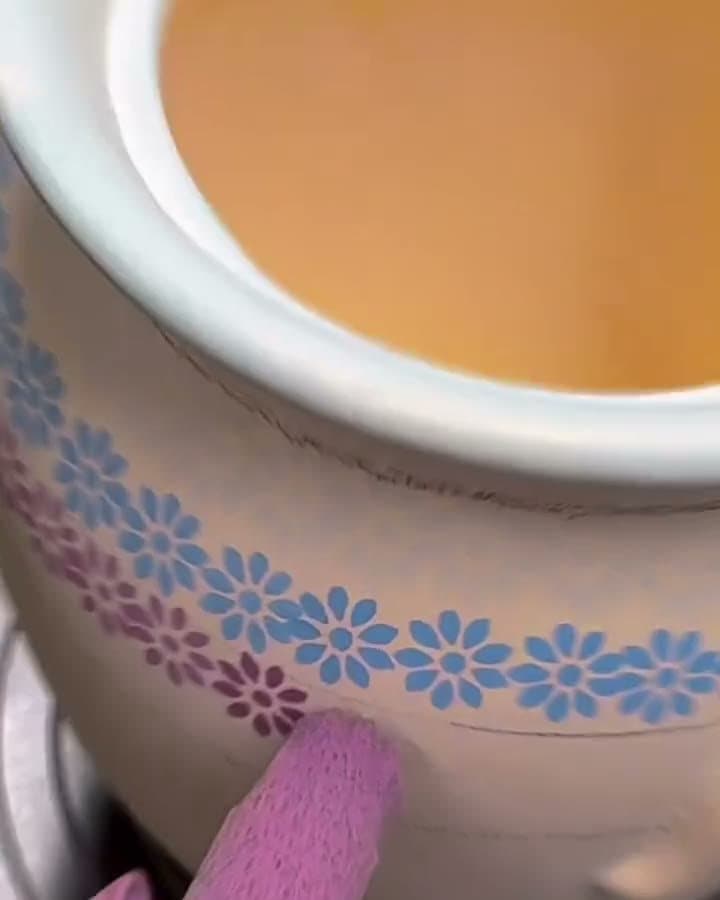
Bisque drinks paint like blotting paper
The pattern is printed on bisque – a piece after its first firing, raw and absorbent. We buy the bisque ready-made, cast in a mould; in our studio its journey begins with painting. Thanks to the mould, a mug of a given size always has the same shape – what sets the pieces apart is what the painter’s hand does with them.
Bisque soaks up paint instantly. There is no correcting it and no washing it off – hence the concentration at the banding wheel, and hence the pencil guidelines. At this stage the paint is lilac, matt, almost pastel. Anyone looking into the studio in the middle of the day will not see navy blue. They will see lilac mugs.
Lilac goes into the kiln, cobalt comes out
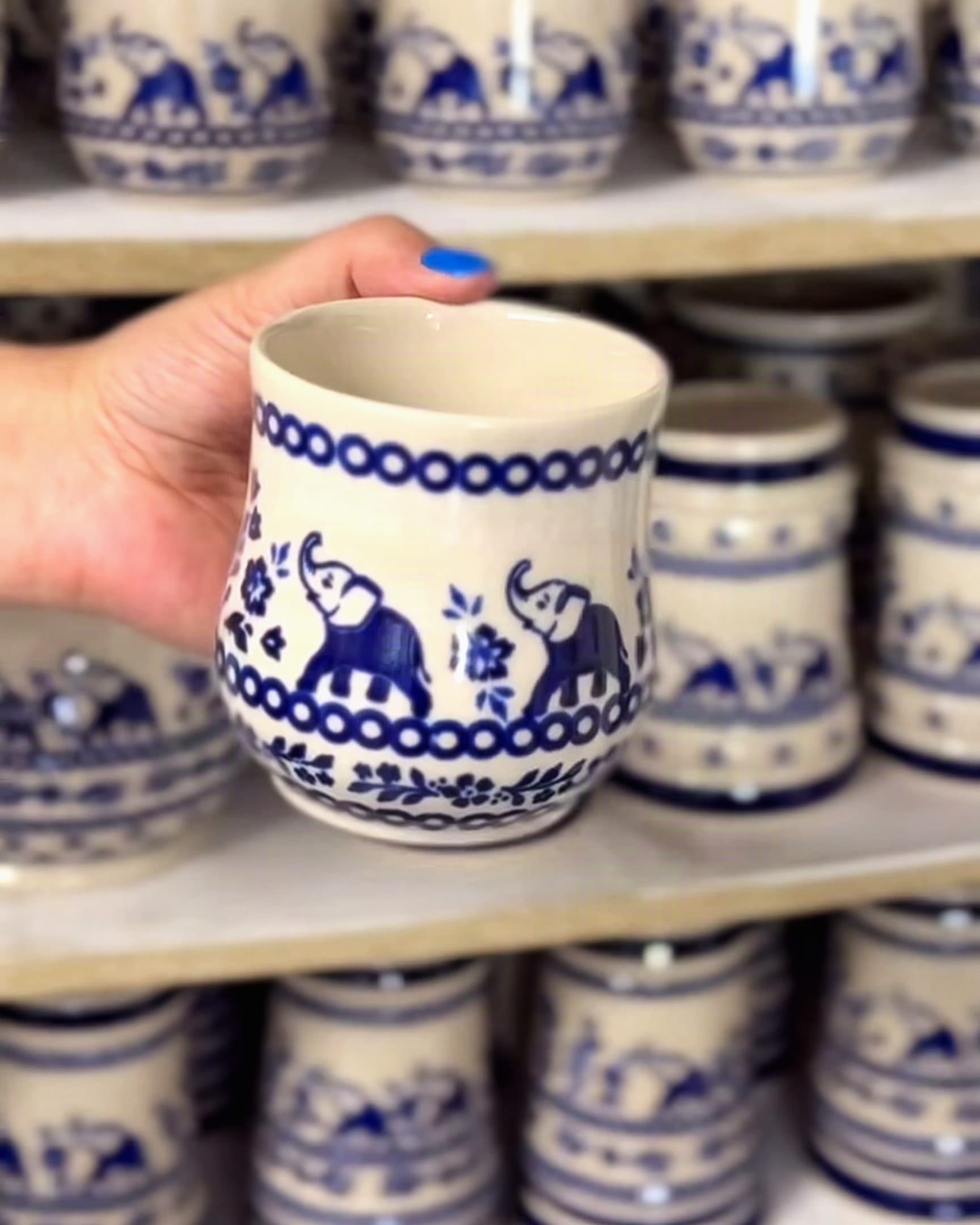
The deep blue only appears in the fire. The painted piece is glazed and fired a second time, at 1240 °C. Under the glaze the lilac paint becomes cobalt – the cobalt you know from the shelf. That is why, in our footage from the studio, the pieces “before” and “after” look like two different patterns, although it is the same stamp. You can see both side by side in the “Fire” chapter.
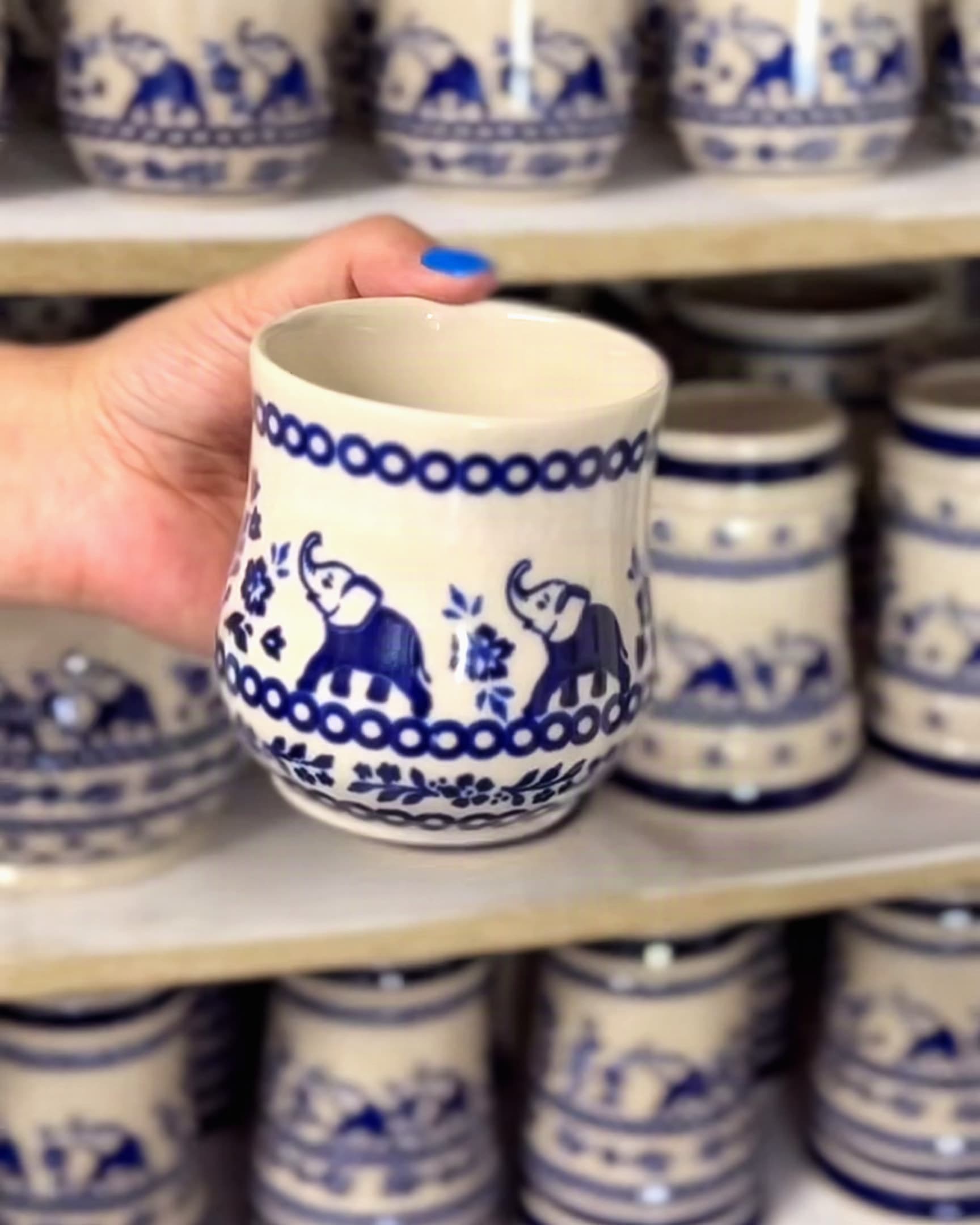
Every piece goes through the kiln on its own, and every print was made by hand – no two pieces are identical. A pattern sealed under the glaze does not wear off or fade in everyday use; how to wash and store the pieces is a separate post: how to care for Polish pottery.
Who does the painting
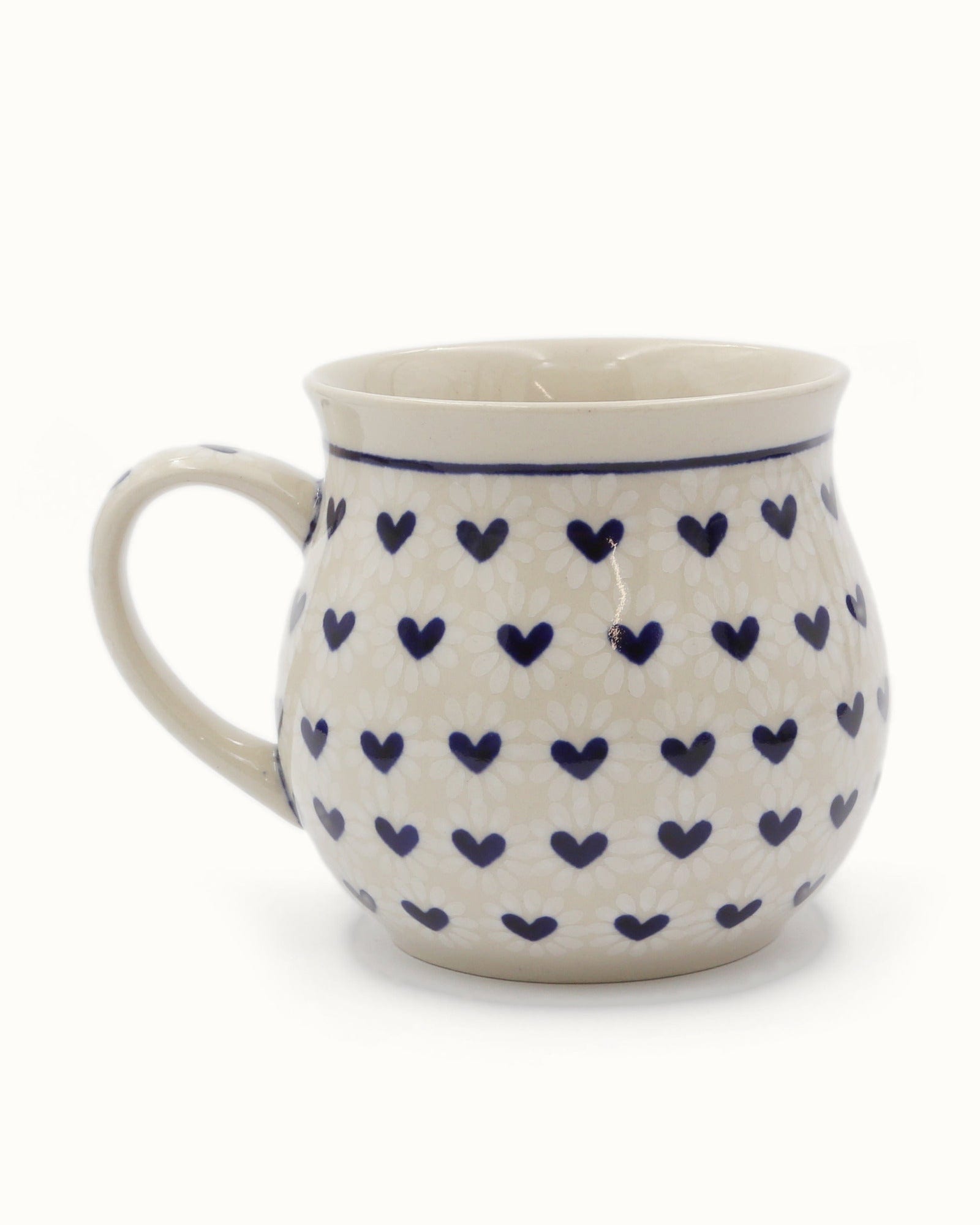
I paint the first pieces of a new pattern myself. Then the studio’s painters take it over – print by print, with the same stamp and in the same arrangement. Every finished pattern gets a name and a catalogue number, such as Bolesławiec Elephants, PS 069, Gingerbread Heart, PS 041 or My Heart Beats Blue, PS 021 – the last of these has a post of its own.
On the base of every piece there is a mark: the Lady Blue logo, the words “Hand made in Bolesławiec Polska” and the UNIKAT stamp. It is applied with the same lilac paint before the piece goes into the kiln.
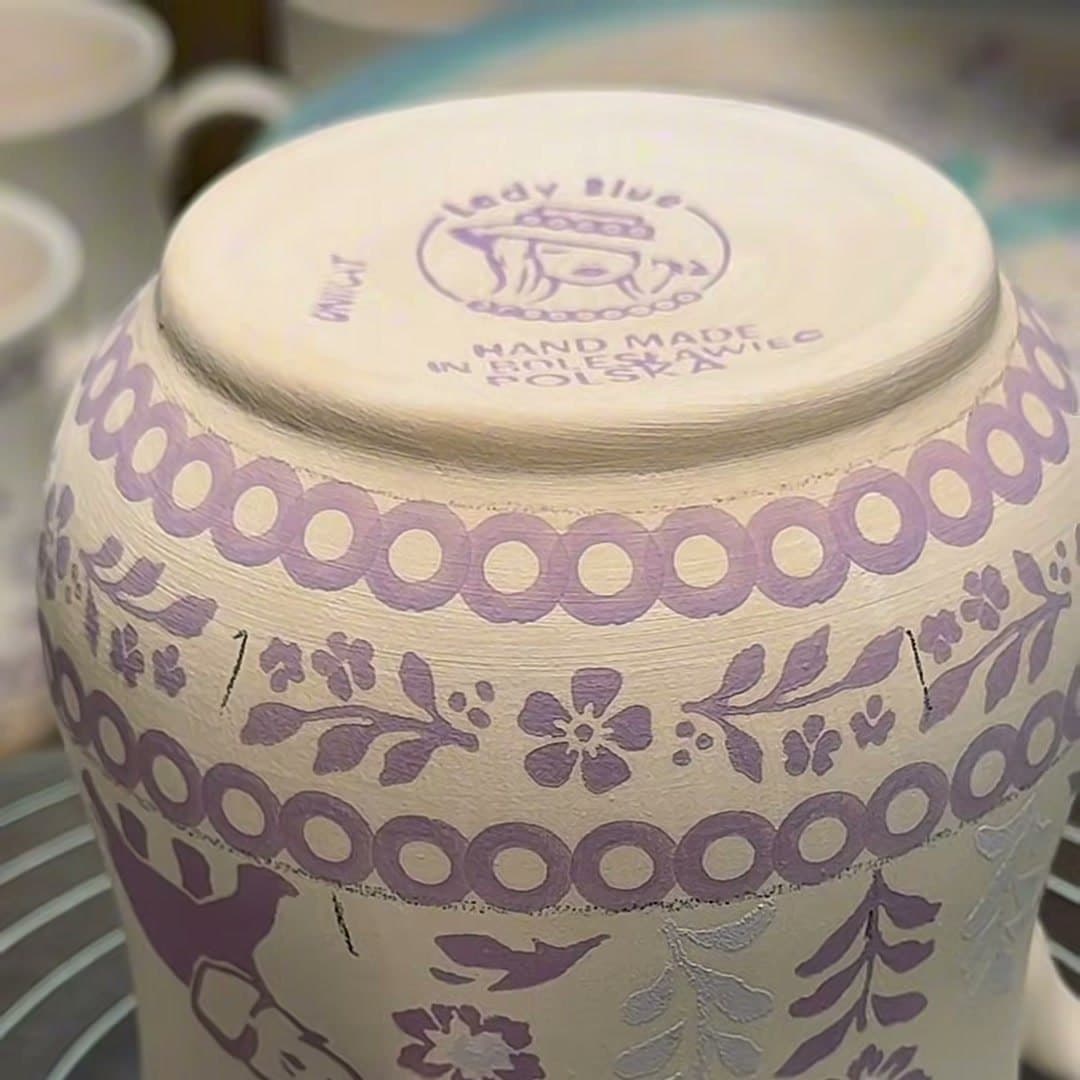
One pattern from start to finish: Bolesławiec Elephants
The sketch with Łobuś on my hand and the mug with the elephants are the same story, filmed day by day. “Yesterday a sketch, today we paint it on pottery” – that is how I captioned the video in which the sponge prints a ring of circles, flowers and the silhouette of an elephant onto bisque. The two elephants that returned to Bolesławiec after many years, and are once again a symbol of the town, have also moved onto our pottery: on a ring of cobalt circles, among flowers and sprigs, with an embossed rim of tiny dots.
The first elephant mugs came out of the kiln in August, just before the Bolesławiec Pottery Festival. The whole journey – from paper, through the stamp, to opening the kiln – is gathered on the Studio page, and every pattern made there is in the pattern catalogue.